Magnificent Mozart & Mahler brings two of classical music’s most beloved works to life with the Long Beach Symphony Classical Series at Long Beach Terrace Theater in Long Beach, CA on June 6, 2026. This concert features Mozart’s cheerful Eine kleine Nachtmusik and the emotionally powerful Symphony No. 5 by Gustav Mahler — a journey from graceful elegance to exhilarating triumph.
In Eckart’s words:
We begin our final concert of the season with one of Mozart’s best-known and most beloved works: Eine kleine Nachtmusik (or A Little Night Music) and like most of Mozart’s works, it sounds so simple and completely belies the composer’s sophistication. We actually don’t know for sure why Mozart composed this piece. He rarely composed without a specific purpose or commission. And there’s no mention of this work in his letters or those of his contemporaries. All we know is that he finished it when he was 31 years old in Vienna—the same year he wrote his opera Don Giovanni. Maybe it was one of several works written for a friend of his, Gottfried von Jacquin, in Vienna. Jacquin’s sister, Franziska, was a pupil of Mozart, and together, they met as a group at Jacquin’s home for what they called “discussions, games, and merrymaking.” Mozart actually wrote several works for the Jacquin household, and A Little Night Music may well have been one of them. And maybe it’s an example of party music—who knows? In any case, it is great music, lots of fun to play and to listen to.
In the second half, we will end our season with a bang—with one of the greatest symphonies of the 20th century: Gustav Mahler’s Symphony No. 5. Mahler was an incredibly busy conductor, and the only time he had to compose was during his summer breaks. Just like Brahms, Mahler usually spent his summers somewhere in the Austrian mountains, or maybe in the mountains of northern Italy. He actually built a house in Maiernigg on Lake Wörthersee in Austria and composed there. It was a special hut, away from the house and everything else—his composing hut. He needed solitude, and like Beethoven and Tchaikovsky, Mahler took long walks. At the time, Mahler studied polyphonic motets by Bach and songs by Schumann, and we can hear both of these influences in his Fifth Symphony. Mahler became really obsessed with polyphony after studying Bach, and we can hear that in the third and fifth movements of the symphony. His study of Schumann’s songs may well have inspired the famous fourth movement, the Adagietto, which we all know from Visconti’s movie Death in Venice.
We can also hear the influence of Anton Bruckner—in the big chorale at the end of the second movement and at the end of the fifth movement. The sounds of Vienna play a big role in Mahler’s music, especially the music of Johann Strauss—the waltz, the lightness, the dance. And very importantly, Mahler was inspired by military music. In his childhood, Mahler spent 15 years in Iglau, where his parents and siblings lived just a few steps away from the town’s main square. There, he was able to watch the performances of the military band, and those military sounds were incredibly important to his music—his music is infused with marching band rhythms of all sorts. All of these elements, and so much more, can be heard in Mahler’s music. The emotional range of this symphony is incredible—from the most tender moments to violent outbursts, from frivolous happiness to tender intimacy, mourning wailing, threatening sounds and defiance. There are often very sudden, almost jarring changes without warning. The emotions sometimes seem in disarray, chaotic, disoriented, even neurotic. In the end, this symphony is a journey from darkness to light.
It opens with a gigantic funeral march and ends in the finale with music that is full of joy—perhaps an experience of redemption, triumph, and victory. It’s a fantastic symphony that reflects the struggle of the individual—Mahler himself—and the universal struggle for happiness, love, and humanism, in general.
Enjoy the concert playlist!
Audiences will enjoy the Classical Series fun and elegant evening surrounded by the Terrace Theater’s dazzling fountains and fire pits, prelude ensemble in the lobby, 6:30 PM Pre-Concert Talk to gain greater knowledge regarding the evening programming, and the ability to “Sip & Enjoy” in the concert hall. Doors open at 6PM.
Pepe Romero Returns marks the celebrated return of classical guitar legend Pepe Romero with the Long Beach Symphony Classical Series at the Long Beach Terrace Theater in Long Beach, CA on February 28, 2026. This special concert features the beloved Concierto de Aranjuez by Joaquín Rodrigo — arguably the most iconic guitar concerto of all time — as well as Gabriela Lena Frank’s Elegia Andina and joyful movements from Handel’s Water Music Suites.
In Eckart’s words:
Our fourth classical concert is very special because we celebrate the return of Pepe Romero to Long Beach Symphony.
Pepe is a living legend who is not only one of the most wonderful musicians I have ever worked with, but also an incredible person who brings an irresistible humanity to the stage and to his music. I think it is that combination of incredible artistry and personality that makes his music-making so unique. I hope you can join us for this singular event. Pepe will perform the guitar concerto of all guitar concertos, the Concierto de Aranjuez by Spanish composer Joaquín Rodrigo, a concerto that transports us to Spain. The first movement is infused with dance-like rhythms– but I really think that the crown jewel of this work is the truly magical second movement, the slow movement and its haunting melody for English horn. It is one of the most beautiful melodies ever composed.
We’ll start the evening with Elegia Andina for Orchestra by Gabriela Frank, a composer who is American but explores her Peruvian roots in her music, much like other composers before her, such as Zoltán Kodály and Béla Bartók, she collects music from indigenous peoples and weaves those influences into her compositions. So, for instance, in her Elegia Andina, there is a very prominent solo flute part inspired by the zampoña, or pan flute. The pan flute, or panpipe, is a traditional Andean instrument that originated in Peru. In this music, you will hear nostalgic elements inspired by the panpipes of the region. For me, Andean Elegy tells a story. I call it “A Day in the Jungle.” The opening represents night and the awakening of the jungle. It’s really like the rainforest groans as it comes to life, and the flute is the first bird awake, making sure that, with an improvisational solo, nobody stays asleep. One after another, the other creatures of the jungle awaken—moaning and groaning, dangerous animals, crawling things, giant snakes—whatever you imagine. Then, there is a tropical storm, and just like in real life, it comes quickly and hits hard, and before you know it, it’s over. Finally, the rainforest music from the beginning returns, evening settles, and in the dusk, only two clarinets are still awake in a love duet. Finally, peace settles in a dreamy atmosphere of the night. So that’s A Day in the Jungle by Gabriela Lena Frank.
In the second half of the program, you will hear George Frideric Handel’s famous Water Music. Handel represents the high point of English Baroque music, which I find very funny because, originally, he was German. But the English loved Handel, especially when he decided to Anglicize his name to George “Frederick.” Besides his masterwork, the oratorio Messiah, it is his Water Music that is his most familiar composition. The story of Water Music speaks to a very twisted storyline that involves royal bloodlines in Britain. Long story short, when Queen Anne died without leaving an heir, the English crown passed to the House of Hanover. The new king, George I, requested music for a lavish boat trip down the River Thames. It was supposed to be a big party, and the king was known to enjoy music during his outdoor excursions. Handel was asked to compose music for the occasion to entertain the king and his guests. The first performance of Water Music was actually on the water, with the musicians stationed in the middle of the river on a barge. It was a kind of open-air concert experience, and Handel himself, of course, directed the band. There were hundreds of boats on the river. The king loved Handel’s music so much that he demanded it be repeated over and over again.
We will play a selection of movements from the three Water Music suites. All movements are based on dance forms of the day, such as the allemande, the sarabande, or minuets. There is a lot of famous music in these suites, and as expected for party music, the pieces are very joyful and bright, with bold brass sections and spirited dances like the gavotte or the famous hornpipe.
Celebratory and festive, this is one of Handel’s greatest orchestral works and a true Baroque masterpiece.
Audiences will enjoy the Classical Series fun and elegant evening surrounded by the Terrace Theater’s dazzling fountains and fire pits, prelude ensemble in the lobby, 6:30 PM Pre-Concert Talk to gain greater knowledge regarding the evening programming, and the ability to “Sip & Enjoy” in the concert hall. Doors open at 6PM.
Our third program features two of my favorite composers, Pyotr Ilyich Tchaikovsky and Richard Strauss.
Tchaikovsky didn’t have an easy life. After his failed—actually, disastrous—marriage and subsequent suicide attempt by drowning in the Moscow River, Tchaikovsky’s patron, Nadezhda von Meck, gave the composer money for a holiday. She told him, “Go away, go away from Russia—go to Switzerland and recover your spirits.” And so, he did. On this trip, Tchaikovsky was accompanied by a friend, the violinist Josef Kotek. When they arrived in Switzerland, they had a lot of time to kill, so together, they read through tons of violin music. As a result of this violin immersion, Tchaikovsky decided to write his own violin concerto which he completed in only two weeks. Over time, this Violin Concerto has become one of the great showpieces in the violin repertoire: It has everything—great melodies, technical pyrotechnics, and colorful Russian orchestration—and every time I conduct it, it is a thrill. Our soloist, Tai Murray, has performed all over the world, with the BBC Scottish Symphony Orchestra, the Chicago Symphony, and the LA Phil, she is a recipient of the Sphinx Organization’s Sphinx Medal of Excellence and is an incredible musician and fantastic violinist.
The second half of the program is going to be fantastic. We will play for you one of the greatest tone poems by Richard Strauss, a work inspired by Miguel de Cervantes’ famous novel Don Quixote de la Mancha. Strauss, who was a brilliant orchestrator and able to create phenomenal colors with the orchestra, captures the fantastic adventures of this aging knight-errant and his loyal squire, Sancho Panza. The musical imagery you will hear is quite incredible. The antihero, Don Quixote, is portrayed by a solo cello, performed by our own principal cellist, Cécilia Tsan. Don Quixote’s servant, Sancho Panza, is represented by the solo viola, played by our principal violist, Andrew Duckles. (I have to say, it is always such a pleasure to present our own brilliant musicians as soloists.) The tone poem follows the adventures of this pair, Don Quixote and Sancho Panza, with Strauss selecting various episodes from the novel. For instance, there is The Adventure of the Windmills, in which Don Quixote charges what he believes to be giants; The Victorious Battle with the Sheep, where the entire orchestra bleeds like sheep; and The Ride Through the Air, where you can literally hear the wind blowing and howling as Don Quixote flies through the sky. It’s an amazing moment in the piece. Don Quixote’s skewed perception of the world—and the clash of his dreams with reality—gives Strauss an opportunity for wonderful ironic effects. You will hear some of the most graphic program music ever written, some of the funniest as well, and some remarkably touching episodes. At its core, it’s a profoundly human story. The music is a remarkable fusion of humor, pathos, virtuosity, lushness and color, and it remains one of Strauss’s most important contributions to the orchestral repertoire.
And imagine—he was only 34 years old when he wrote this. It’s incredible.
Audiences will enjoy the Classical Series fun and elegant evening surrounded by the Terrace Theater’s dazzling fountains and fire pits, prelude ensemble in the lobby, 6:30 PM Pre-Concert Talk to gain greater knowledge regarding the evening programming, and the ability to “Sip & Enjoy” in the concert hall. Doors open at 6PM.
Long Beach Symphony Pops Season opens with a salute to the classic rock band. Relive the 70s and 80s and enjoy an evening of catchy, emotive pop-rock hits paired with an orchestra, rock band, and brilliant vocals. Get ready to dance the night away to some of Journey’s most popular songs, such as Any Way You Want It, Separate Ways, and of course, Don’t Stop Believin’!
Enjoy the unique vibe of Long Beach Symphony’s Pops! Bring your own food and libations, or pre-order from these pre-approved vendors for delivery to your table. Two dance floors surround the stage, and dancing is encouraged throughout the evening, so don’t forget those dancing shoes… Doors open at 6:00pm for indoor picnicking. Bring your baskets with food, sweets, libations, and even costumes and table decorations.
We open this program with a piece by a Lebanese composer, Houtaf Khoury. He studied in Tripoli, Lebanon, and in Kiev, Ukraine. He has composed five symphonies, several concertos for various instruments, as well as chamber and solo music. What you are about to hear is a touching, beautiful, rich, and honest work called The Journey. It is scored for solo violin and strings. It is a magical work that will feature our concertmaster, Roger Wilkie, on solo violin.
Concerto for Two Pianos displays the genius of Bohuslav Martinů in this vibrant and rhythmically dynamic work that he composed in 1943 during his time in the United States. Often compared to Prokofiev and Bartók for his innovative incorporation of Czech folk elements into his music, his music from this period reflects a combination of his European roots and his exposure to American musical life. The Concerto for Two Pianos is particularly known for its energy and rhythmic complexity, typical of Martinů’s neoclassical style.
Our final work of the evening is Beethoven’s Symphony No. 6, his Pastorale Symphony. In contrast to the dramatic and intense Symphony No. 5, which was written around the same time, this symphony is infused with a sense of peace and tranquility: Beethoven loved nature. He often took long walks in the countryside to think, be alone, and find peace. This symphony vividly depicts rural landscapes, shepherds, and the serenity of the countryside. Beethoven gave titles to each movement. For instance, the first movement is called Awakening of Cheerful Feelings Upon Arrival in the Countryside. Then we have the scene By the Brook,Merry Gathering of Country Folk, the famous Thunderstorm, and finally, the Shepherd’s Song. Beethoven masterfully invents themes that evoke the sounds of nature. You can hear bird calls in the woodwinds, the rustling of leaves, the gentle flow of a brook in the strings, and then the thunderstorm, where the entire orchestra is going crazy.
This symphony represents a search for solace in nature. Composed during a time of personal and political turmoil, it reveals a deeply intimate and personal side of Beethoven, as we accompany him on his journey through the countryside.
Audiences will enjoy the Classical Series fun and elegant evening surrounded by the Terrace Theater’s dazzling fountains and fire pits, prelude ensemble in the lobby, 6:30 PM Pre-Concert Talk to gain greater knowledge regarding the evening programming, and the ability to “Sip & Enjoy” in the concert hall. Doors open at 6PM.
Our opening concert begins with a work by Haitian American composer Sydney Guillaume. Titled Lavil Okap, or “the city of Cap-Haïtien” in Haitian Creole, the piece was composed in 2020. The music draws inspiration from the African rhythms that enslaved people brought to Haiti, and from the very first notes, it projects a jubilant atmosphere driven by catchy rhythms throughout. He really brings Haitian street music to the concert hall. It’s a piece that is a lot of fun to play, and I know you’ll love listening to it. As a special treat, the composer himself will join us for the performance.
In contrast, our next piece features the mesmerizing music of Frédéric Chopin. We will be performing his Piano Concerto No. 2, welcoming back the brilliant Fei-Fei, who became one of Long Beach’s favorite pianists when she performed Rachmaninoff’s Second Piano Concerto in 2018. Chopin wrote mostly piano music—mazurkas, waltzes, polonaises—and very little for piano and orchestra. He was just 19 when he composed this concerto and its premiere at the Warsaw National Theatre marked his first major concert success. The press hailed him as the “Paganini of the piano.” And yet, his music requires “fast fingers,” but it is so much more: he really finds the soul of the piano and his music comes not only virtuosic, but also very intimate and personal–almost fragile at the same time. The most memorable parts, for me, are not the fast, brilliant parts, but the slow and heavenly middle movement. In a letter, he writes that this middle movement was inspired by his love for a fellow student at the conservatoire, a young singer. If music can express love and vulnerability, this is the music.
For the second half of the program, big contrast again, as we end the concert with a bang with Leonard Bernstein’s West Side Story Symphonic Dances. Bernstein was not only the greatest American conductor, but also one of the greatest American composers. The piece that earned him his widest popular acclaim is West Side Story. It was written in the 1950s and is a remake of Shakespeare’s Romeo and Juliet, but this time this tale is a tale of young love against a backdrop of gang warfare in New York City. The music is so fantastic and brilliant. You will recognize a lot of the famous songs and dances, including America, Maria, and the Mambo. The Long Beach Symphony is going to knock it out of the park—and you’ll be part of the performance as well! So warm up your voices, and we’ll see you there!
Audiences will enjoy the Classical Series fun and elegant evening surrounded by the Terrace Theater’s dazzling fountains and fire pits, prelude ensemble in the lobby, 6:30 PM Pre-Concert Talk to gain greater knowledge regarding the evening programming, and the ability to “Sip & Enjoy” in the concert hall. Doors open at 6PM.
Instrument Petting Zoo for Kids!
Long Beach Symphony’s beloved Instrument Petting Zoo is back! IPZ is a collection of orchestral instruments that travel around to neighborhood libraries and community events to provide children with a hands-on exploratory music education experience. Our knowledgeable volunteers give a special presentation to explain how each instrument works, how to produce a sound, and how each instrument fits into the orchestra. Afterwards, children have the chance to put what they learned to the test and try each instrument. The Instrument Petting Zoo is designed to pique the interest of young children in playing an instrument and create lifelong music lovers.
2026 INSTRUMENT PETTING ZOO EVENTS. (Updated 5/6/26. Information is subject to change)
Thursday, August 6th- Billie Jean King Main Library 3pm
200 W Broadway, Long Beach, CA 90802
Friday, August 7th- El Dorado Library 2pm
2900 N Studebaker Rd, Long Beach, CA 90815
Friday, August 14th – Redondo Beach Main Library 3pm
303 N Pacific Coast Hwy, Redondo Beach, CA 90277
Interested in volunteering?
Long Beach Symphony will provide the supplies, instruments, and information for each IPZ, but we need volunteers!
Duties
· Give a quick demonstration on each instrument to the attending children/ adults
· Supervise children and adults when playing instruments
· Sanitize instruments from person to person
Qualifications
· An interest in music education
· Training meeting attendance
· Available to volunteer for at least 2 dates
If you or someone you know are interested in volunteering, please contact [email protected] or call (562) 436-3203 ext. 224.
The Instrument Petting Zoo is generously sponsored by The Wolfe Foundation, and Ovation – Volunteers of the Long Beach Symphony
For questions and more information contact [email protected] or call (562) 436-3203 ext. 224.
Los Altos Library ’23
Ruth Bach Neighborhood Library ’23
High School Petting Zoo Volunteers ’23
Cerritos Library ’23
Torrance Public Library ’23
Ruth Bach Neighborhood Library ’23
Bret Harte Library ’23
Bret Harte Library ’23
Family Concert ’22
Family Concert ’22
Family Concert ’22
Family Concert ’22
Family Concert ’22
Music Tastes Good -’19
Music Tastes Good ’19
Music Tastes Good ’19
Music Director Eckart Preu and Young Boy exploring the Cello
The Instrument Petting Zoo is generously sponsored by The Wolfe Foundation and Ovation! – the Official Volunteers of the Long Beach Symphony
Crescendo: All That Jazz
Experience our Symphony Speakeasy! Sunday, May 3, 2026, 4:00PM
The Westin Long Beach | 333 E Ocean Blvd, Long Beach, CA 90802
Celebrating 2026 Luminary Award Honorees Lyn and John Pohlmann
Step into an alluring era as Long Beach Symphony invites you to an intimate, jazz club–inspired evening in support of music education programs in partnership with the Long Beach Unified School District.
The evening begins with a stylish cocktail reception and silent auction accompanied by live jazz piano. Guests will enjoy an elegant dinner and electrifying performances by Principal Trombonist Alex Iles and a sizzling jazz ensemble.
Bid on rare wines and extraordinary experiences while savoring sultry rhythms reminiscent of the golden age of jazz. Mix and mingle with Music Director Eckart Preu, the world-class musicians of the Symphony, and fellow music lovers for an unforgettable night of music, celebration—all in support of an inspiring cause.
Help us unite and inspire all people through the transformative power of music.
Benefitting Long Beach Symphony’s Award-Winning Music Education Programs.
2026 Crescendo Organizing Committee
Paulette Matson and Karen Widerynski, co-chairs
Cindy Costello, Margie Masterson, Bobbie Cusato, Barbara Blackwell, John Pohlmann, and Evelyn Zohlen
Love Stories: Tchaikovsky 4 and More!
Embark upon this musical journey which recognizes the Symphony’s meaningful relationships and partnerships in Long Beach, including the Cambodian community. This concert is a celebration of who we are.
It will open with traditional Cambodian music, the ethereal performances of Cambodian dancers Modern Apsara, and the resounding Pin Peat Ensemble under the guidance of Master Ho. “Hanuman & Sovan Macha” from Ramayana Story is arranged for orchestra by Hans Preu. The Ramayana is an ancient Indian epic that tells the story of Prince Rama’s journey to rescue his wife Sita from the demon king Ravana. It’s a complex tale with themes of love, duty, courage, and good versus evil.
This carefully curated program unfolds as a tapestry of cultural resonances, an ode to Long Beach’s diverse populace. Chinary Ung’s composition, “Water Rings, Overture,” emerges as a testament to the symbiosis of tradition and innovation, echoing the legacy of his mentor, Chinese-American composer Chou Wen-chung. Ung skillfully intertwines the threads of traditional Cambodian melodies with avant-garde elements, mirroring Wen-Chung ‘s groundbreaking fusion with traditional Chinese music in a true cultural convergence. (Many audience members will recall Chinary Ung for Long Beach Symphony’s premiere production of KHMERASPORA.)
The Butterfly Lovers violin concerto, beautifully written as a collaboration by He Zhanhao and Chen Gang will feature guest artist Gao Can on violin.
Concluding this evocative journey (and season) is Tchaikovsky’s Symphony No. 4, the same piece that closed Long Beach Symphony (then known as Philharmonic) 1st season on June 7, 1935! Delving into the depths of Tchaikovsky’s personal tribulations and a poignant expression of the composer’s tumultuous emotional landscape, the symphony unfolds as a powerful narrative that includes the fleeting romance that marked the composer’s tumultuous piece. Not to be understated, it was this piece that Music Director Eckart Preu used for his audition that gained him the prestigious podium with Long Beach Symphony in 2017. This symphony promises to be a grand crescendo, resonating with the transformative evolution of the orchestra under the conductor’s baton.
Get an early start enjoying these wonderful pieces:
Audiences will enjoy the Classical Series fun and elegant evening surrounded by the Terrace Theater’s dazzling fountains and fire pits, live ensemble in the lobby, 6:30 PM Pre-Concert Talk to gain greater knowledge regarding the evening programming, and the ability to “Sip & Enjoy” in the concert hall. Doors open at 6PM.
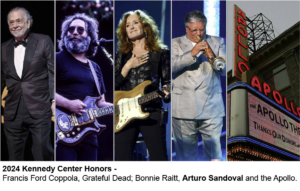
This evening will captivate a diverse audience drawn together by the magnetic allure of the multifaceted virtuoso, Arturo Sandoval. Renowned for his mastery in the realms of both jazz and classical music, Sandoval’s ten GRAMMY Awards and his expansive repertoire as a trumpeter, vocalist, storyteller, and composer ensure a captivating performance, promising a harmonious fusion of genres and emotions.
We open with Adam Schoenberg’s “Cool Cat,” a piece inspired by the captivating Los Angeles’ own P22, a thematic inspiration with vibrant fanfare. (We appreciate permission to play this piece for which LA Phil has exclusive rights.)
In honor of our virtuosic guest artist, George Gershwin’s “Cuban Overture” is a nod to Sandoval’s Cuban heritage. This piece, born from Gershwin’s immersive experiences in Havana in the 1930s and his fascination for Cuban music and percussion instruments reminds us of Gershwin’s return from Cuba with a suitcase full of instruments that will eloquently blend Cuban rhythms and instrumentation into this rich soundscape.
Arturo Sandoval then takes the stage featuring his magnum opus, “Concerto for Trumpet No. 2.” Sandoval’s versatility shone through as he seamlessly transitioned between trumpet, piano, and vocals, enraptures the audience with not just his musical prowess but also his engaging storytelling. The performance, reminiscent of a bygone Las Vegas era display of the multitude of talents, is enhanced by Sandoval’s charisma and generosity of spirit that will elevate the evening into a transcendent experience of inclusivity.
The orchestra takes center stage with Paul Hindemith’s “Symphonic Metamorphosis,” a composition serving as a dazzling and catchy showcase of the orchestra’s prowess. The piece, though perhaps not immediately recognizable by its title, is familiar to most. Born in Germany and fleeing first to Switzerland and eventually to America, Hindemith demonstrates his ability to draw inspiration from the romantic German composers and crafts a four-movement symphony that resonates with both familiarity and innovation, pleasing to musicians and audiences alike.
Completing the evening is Rachmaninoff’s SERGE: Themes from Piano Concerto No. 2, which transports listeners through a poignant musical journey. With emotive piano phrases supported by lush orchestration, the Adagio unveils a profound emotional landscape. A delicate balance of restraint and passion characterizes this movement, drawing the audience into a world of profound introspection.
Learn more about Arturo’s story here:
Audiences will enjoy the Classical Series fun and elegant evening surrounded by the Terrace Theater’s dazzling fountains and fire pits, live ensemble in the lobby, 6:30 PM Pre-Concert Talk to gain greater knowledge regarding the evening programming, and the ability to “Sip & Enjoy” in the concert hall. Doors open at 6PM.